Fogg’s Arrest and Release in Liverpool
Around the World in Eighty DaysPhileas Fogg’s arrest and release in Liverpool turns the final approach to London into a sudden reversal: with the destination only six hours away, a warrant detains him as a suspected robber, and the detective who has pursued him must then acknowledge a mistaken identity. The episode briefly makes freedom itself the obstacle to Fogg’s journey, while exposing the cost of Passepartout’s silence and the strain the arrest places on the party.
Arrival and Arrest
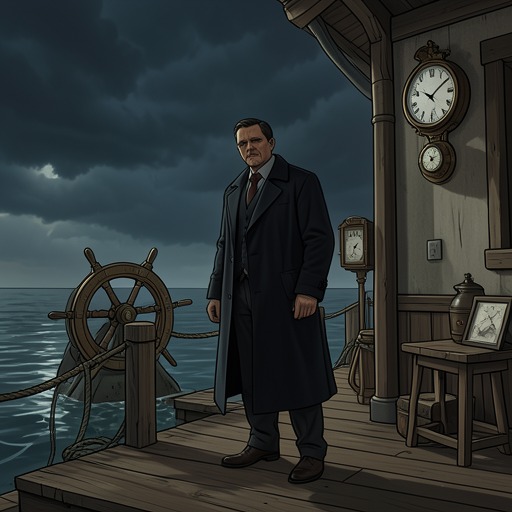
Fogg disembarks on the Liverpool quay at twenty minutes before twelve on 21 December. London is only six hours away. Fix approaches, places a hand on Fogg’s shoulder, shows his warrant, and arrests him in the Queen’s name. The interruption comes at the point when the journey has nearly reached its destination: Fogg is on English soil, but the remaining distance cannot be covered while he is in custody.
Fogg is shut up in the Custom House, with a transfer to London planned for the following day. Fix acts because he considers the arrest his duty, whether Fogg is guilty or not. That insistence on procedure gives the scene its stark imbalance: Fogg faces confinement and a potentially ruinous delay, while the warrant-holder proceeds without first resolving the suspicion that has followed the party.
The Party in Custody’s Shadow
Passepartout reacts to the arrest with immediate anger and would have attacked Fix if policemen had not held him back. Aouda is thunderstruck by the sudden turn. Passepartout explains that Fogg, whom he describes as honest and courageous, has been arrested as a robber; Aouda cannot accept the charge against the man who protected her, and weeps when she sees that she cannot help him.
The arrest also forces Passepartout to confront his own earlier choice. He realizes that he had concealed Fix’s mission from Fogg and had failed to reveal Fix’s true purpose when it became clear. In Passepartout’s painful reconstruction, a warning might have let Fogg prove his innocence and correct Fix’s mistake; at the least, Fix might not have continued following the party only to make the arrest upon their return to England. Passepartout weeps until he is blind and feels like taking his own life. The delay therefore carries a second burden: alongside Fogg’s confinement is Passepartout’s conviction that his silence helped bring it about.
Mistaken Identity and Release
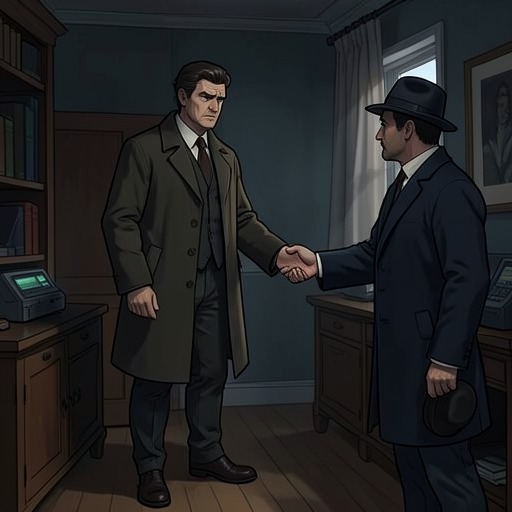
At thirty-three minutes past two, Fogg hears a commotion and recognizes Passepartout’s voice, followed by Fix’s. When the door opens, Passepartout, Aouda, and Fix hurry toward him. Fix is out of breath and disordered; he struggles to speak, then explains that the resemblance was unfortunate and that the robber had been arrested three days earlier. Fogg is free. The new information reverses the meaning of the warrant: the man detained as the criminal is instead the victim of a mistaken identification, while the actual robber is already in custody.
Fogg looks steadily at Fix and knocks him down with a single rapid movement, described as the only rapid motion he had ever made or ever would make. Passepartout welcomes the blow; Fix, on the floor, says nothing and accepts that he has received his deserts. The sharp physical interruption contrasts with Fogg’s customary precision, and marks the anger released by the arrest without changing the practical urgency of what follows.
The Cost of the Delay
Fogg, Aouda, and Passepartout leave the Custom House without delay, take a cab, and reach the station. It is forty minutes past two, but the express train has already left, thirty-five minutes earlier. Fogg orders a special train; although several rapid locomotives are available, railway arrangements prevent it from departing before three o’clock. Release restores Fogg’s freedom, but not the time lost in custody. The episode thus ends not with arrival in London, but with another race against the clock, now made more difficult by the arrest that had seemed, only moments before, to end the journey.